Our journey to Iceland began early in the morning when we set off for Budapest. We had already bought a 10-day vignette online for the Hungarian highway before entering the country.
The drive to the airport was great as the Hungarian roads are well maintained, and the scenery was fresh and green, full of spring colours. A completely different scene compared to when we visited Budapest during Advent.
After arriving at the airport, we parked the car in a secure lot about five minutes from the terminal. We booked the parking in advance and paid 43 euros for eight days. A free shuttle bus took us to the airport.
Everything was going smoothly until we got to the baggage drop. Our ticket included 32kg of luggage, and we thought this total weight might include more pieces of luggage. The weight is considered for one piece only, so we had to pay for the extra suitcase. If something similar happens to you, always pay for extra luggage through the app, because it is much cheaper than at the airport!
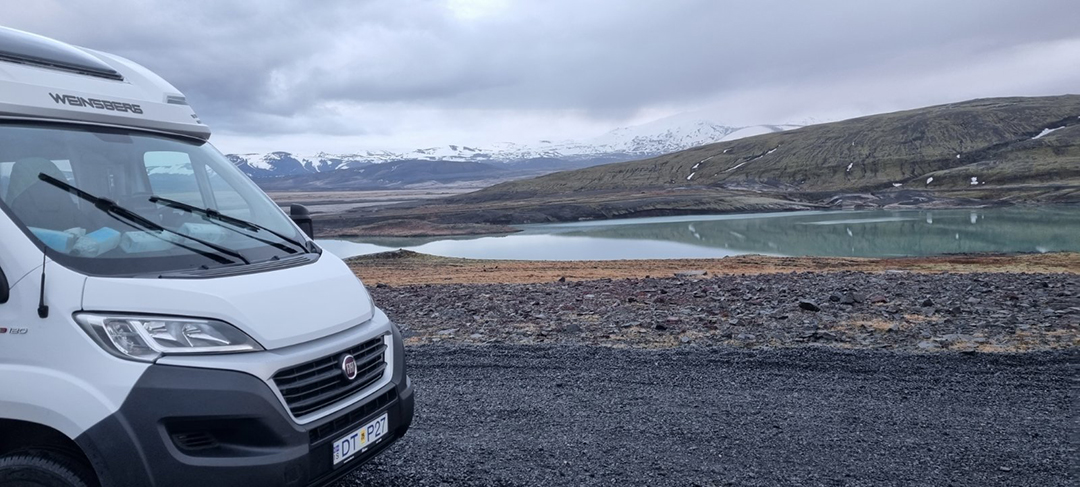
The flight to Keflavík took 4 hours and 40 minutes, while the return flight was 3 hours and 50 minutes. After landing in Keflavík it was already 10 pm our time, but 8 pm in Iceland. Upon landing, a shuttle was already waiting at the airport to take us to the motorhome, which we had rented through the Motorhome Iceland website for a full seven days at a cost of 2,000 euros. The rental base was just a five-minute drive from the airport.
As we were picking up the motorhome, we ran into a slight inconvenience. We realised that neither the heating nor the toilet flush was working. Both are essential, especially with Icelandic temperatures. After four hours of waiting, we finally got a different motorhome where (almost) everything worked.
You can read about everything you should check when renting a motorhome in a separate post, where I share all our experiences with rentals. Since we have been travelling with rented motorhomes for quite a few years now, we have learned a lot along the way.
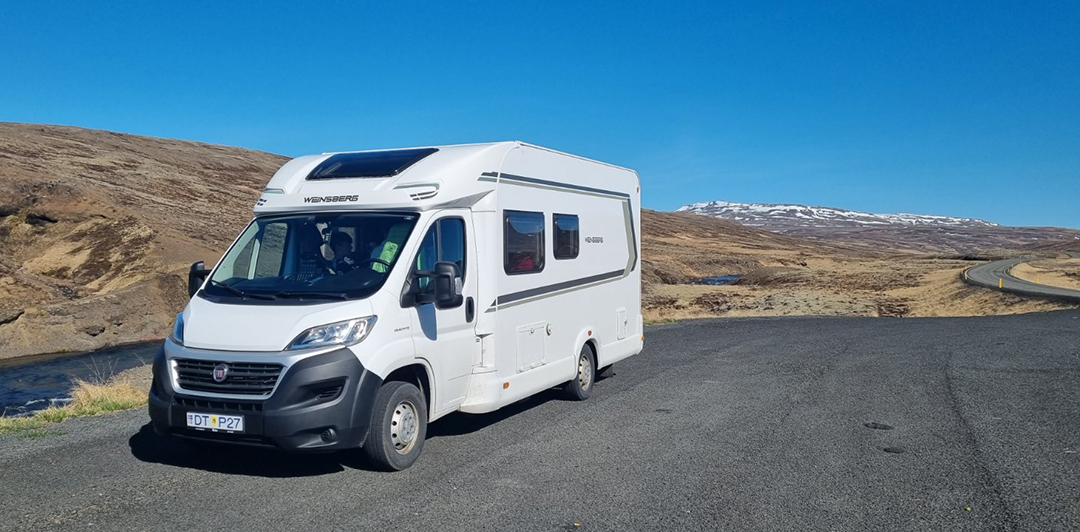
In Iceland, you are only allowed to sleep in campsites, but we did not spend a single night in a campsite. Instead, we slept outdoors by lakes, the sea, and so on. As long as you respect nature and do not leave any rubbish lying around, it is all fine. The only important thing is to follow the rule that if an area is clearly marked as no camping, then you simply do not camp there.
In the rest of this travelogue, I share where we slept, what we saw, and what we experienced. I can say without a doubt that everything we saw is truly worth visiting.
Since it was already late, we spent our first night right by the main road between Keflavik and Reykjavik, in the car park in front of a hotel.
After our first night in Iceland in front of the hotel, we set off early in the morning towards one of the most famous and popular routes in Iceland, the Golden Circle.
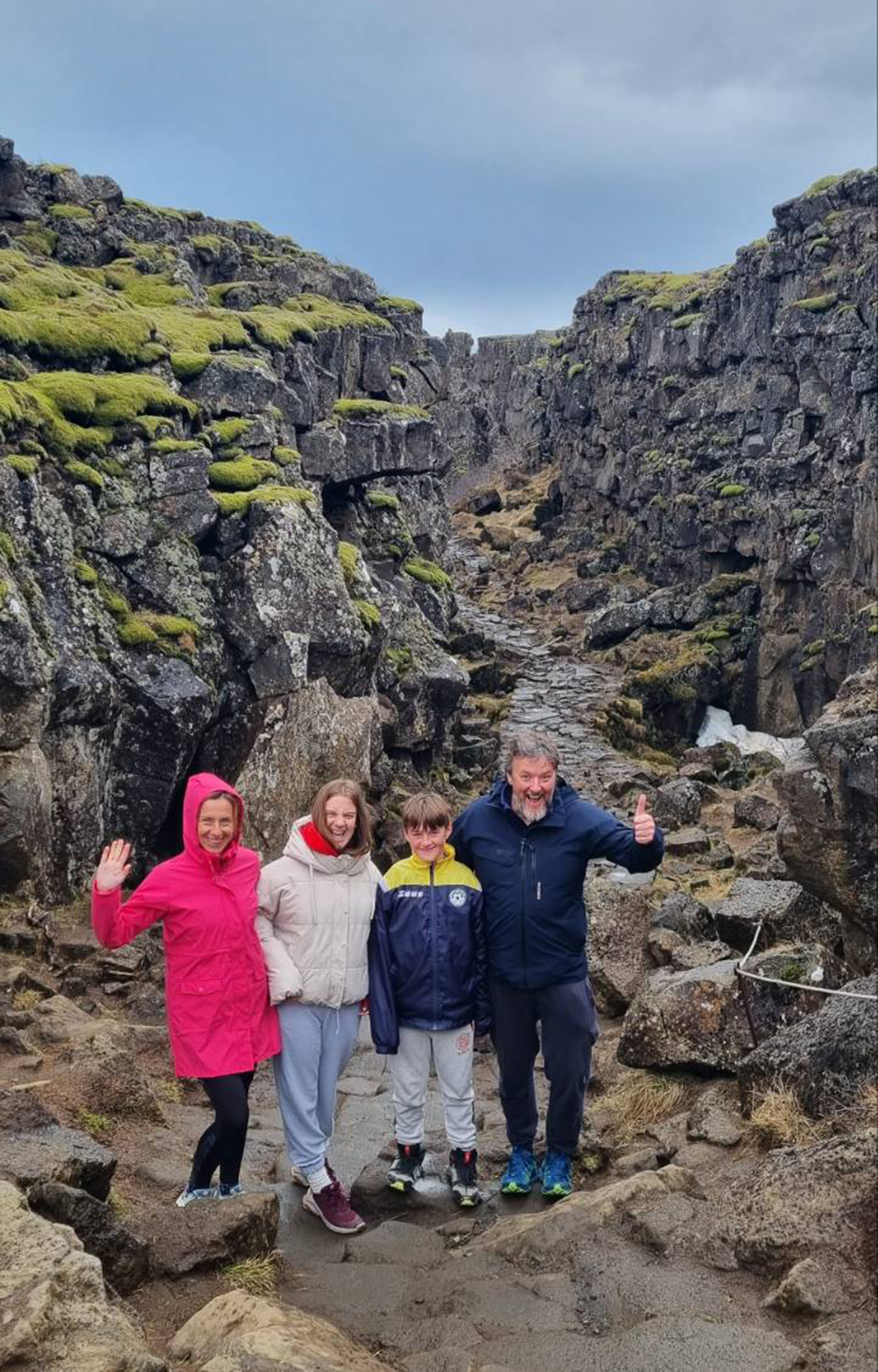
Our first stop was Stekkjargjá, which is part of Þingvellir National Park, where you can actually walk between two tectonic plates: the North American and the Eurasian. It is the only place in the world where this phenomenon is so obvious and accessible to visitors.
We walked through the Almannagjá gorge, where the rift between the plates is most noticeable.
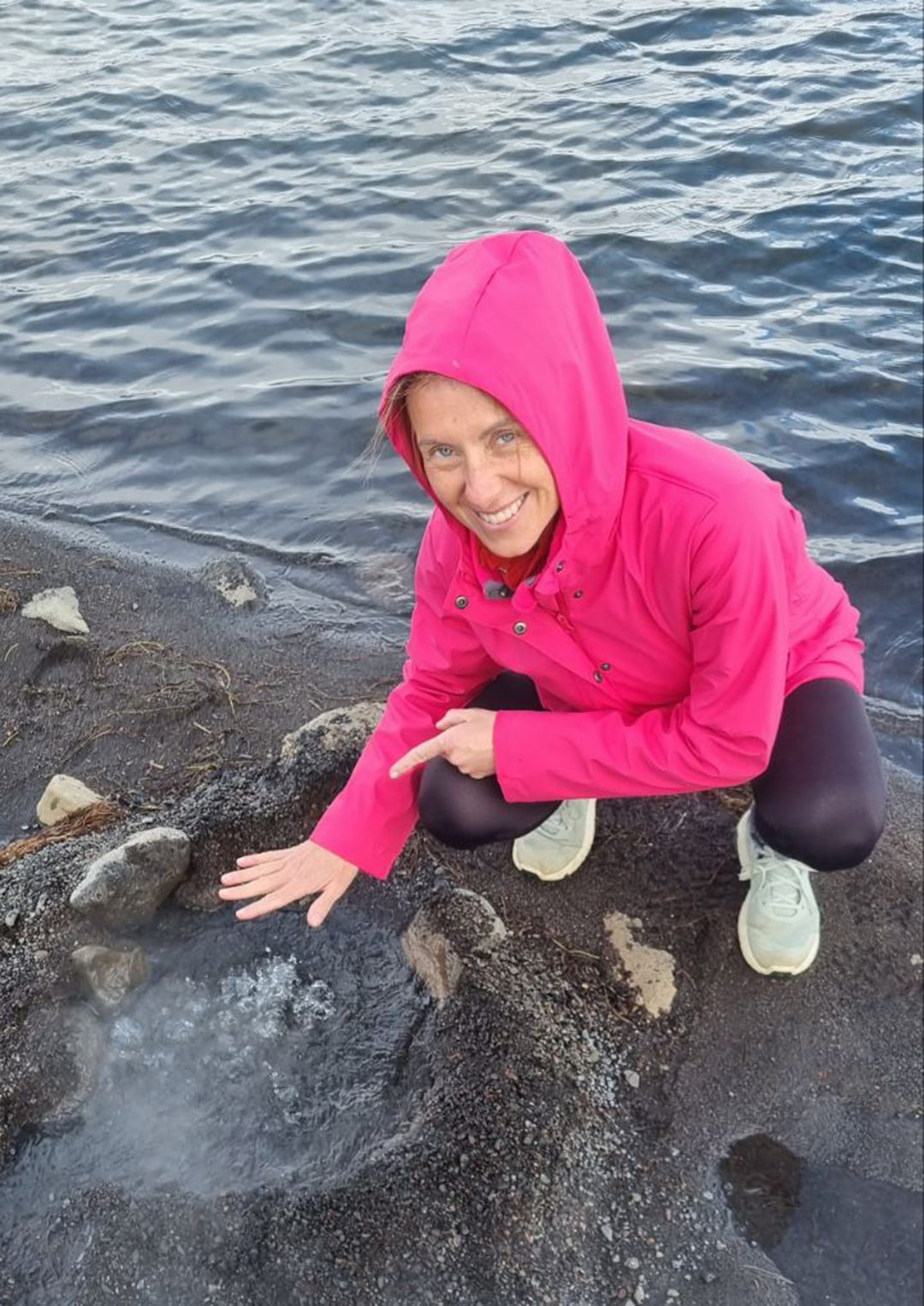
We then continued to Laugarvatn, where we visited the Laugarvatn Fontana. Here we had the chance to see a small geyser up close, spouting steam and hot water from the ground. The area is full of natural hot springs, and by the lake there is also a thermal spa complex with natural steam baths and warm pools.
We decided not to visit the spa because we were looking for something more authentic and less crowded.
We continued to one of Iceland’s most famous natural attractions, the Haukadalur Geyser Valley, home to the renowned Geysir Geothermal Area. This geothermal wonder of Iceland is a highlight of the Golden Circle. This is where they filmed a commercial for Uncle Ben’s rice.
The main Geysir, after which all geysers in the world are named, is currently dormant. The main focus is therefore on the Strokkur geyser, which erupts every 15 to 18 minutes, shooting water up to 30 metres into the air.
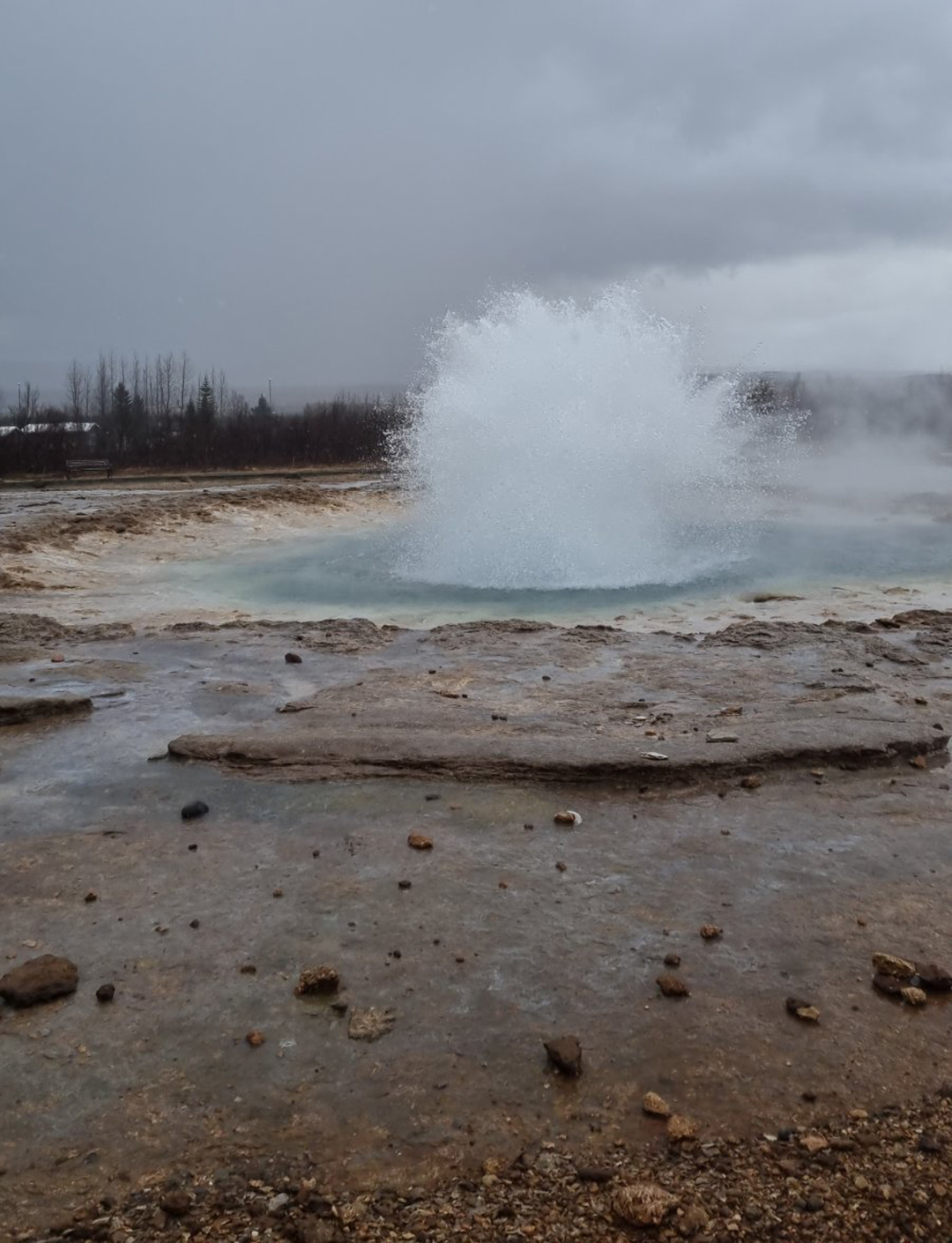
We left the motorhome in a designated car park, which we needed to pay 1000 ISK or about 6.85 euros for.
One of the advantages of the Golden Circle is that the distances between the sights are relatively short, so we were able to visit all the main spots in a single day without rushing, with plenty of time for stops and exploring.
After experiencing the natural spectacle of Strokkur erupting, we continued to one of Iceland’s most stunning and iconic natural attractions, the Gullfoss waterfall.
Gullfoss is not only the most famous waterfall in Iceland, but also one of the most magnificent. It simply leaves you speechless. It is incredible to see the sheer volume of water and the speed at which it plunges into the gorge. The water drops 31 metres, creating a breathtaking sight that you do not forget easily.
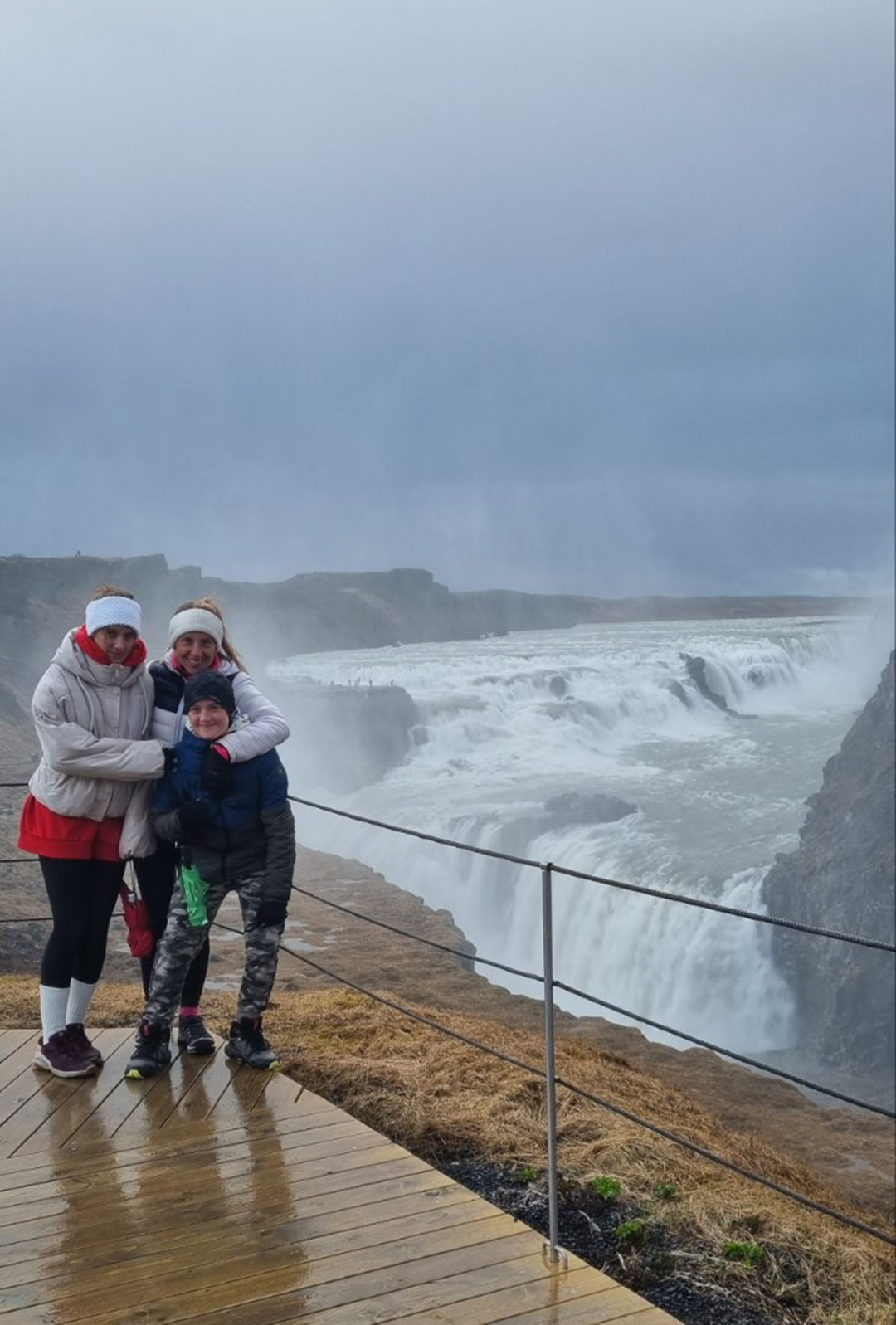
There is a well-maintained path leading to Gullfoss, with a big car park next to it. The walk to the waterfall is short and easy. Standing at the edge of the cliff and watching the water pour down into the gorge, we were struck by its unstoppable power.
The next day we were on our way to the Granni and Háifoss waterfalls. However, since the road was impassable, we skipped the waterfall and spent the night by a nearby lake.
The morning greeted us with silence and a view we will not forget – complete solitude, with no sign of human presence. Just us, nature, birds and water. This is why we went to Iceland in the first place. For complete calmness and contact with nature.
After driving the Golden Circle, we continued along the south coast, making our way around Iceland in a counterclockwise direction.

Copyright (©) 2010 - 2026 Youth Hostel | Our Privacy Policy | Cookies | | RPC