Before we move on to practical advice, let us learn about two of Moscow’s most popular walking streets.
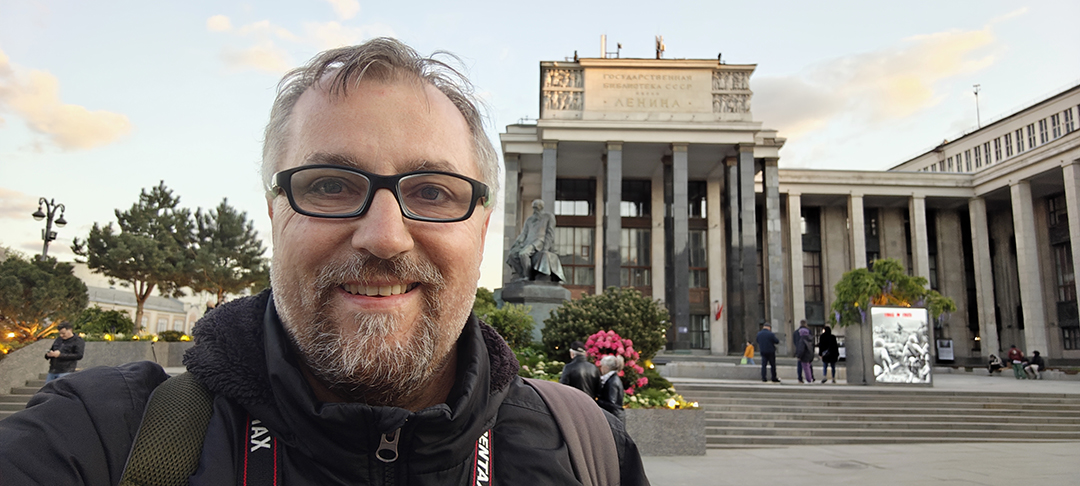
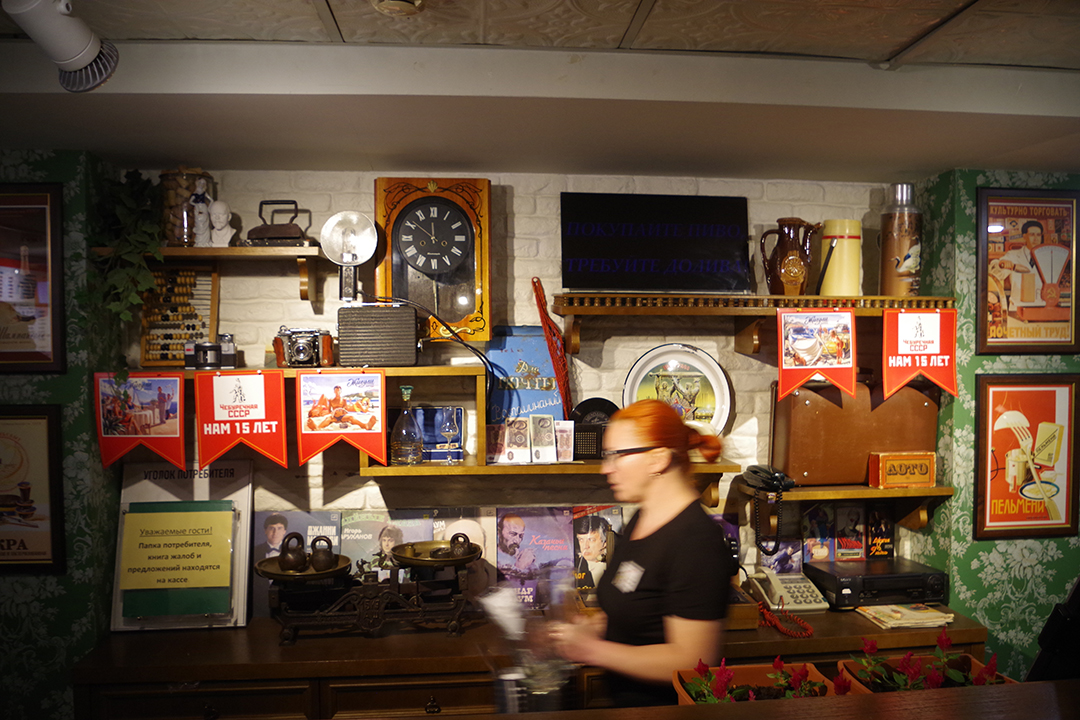
Arbat Street, which is about one kilometre long, has been the main walking street of Moscow for more than five hundred years. It started as a trade route with workshops and homes of local craftsmen. Today it is the most important pedestrian area with countless Turkish, Italian, Indian, and American restaurants. Just like in the centres of some other capitals, it is easier to find a Turkish restaurant than one with traditional national food. But with a little patience, I discovered a very special restaurant called Cheburechnaya SSSR (Чебуречная СССР), which is decorated in the style of a "canteen" in the Soviet Union, so in addition to excellent food, you also get to enjoy an atmosphere that takes you back to the 70s and 80s.
Besides traditional soups and stews, such as borscht and solyanka, the restaurant also has other dishes on the menu. The most popular is of course cheburek, a fried meat-stuffed pastry after which the restaurant is named. Despite the atmosphere and central location, the food and drink prices are still quite moderate, so I recommend a visit.
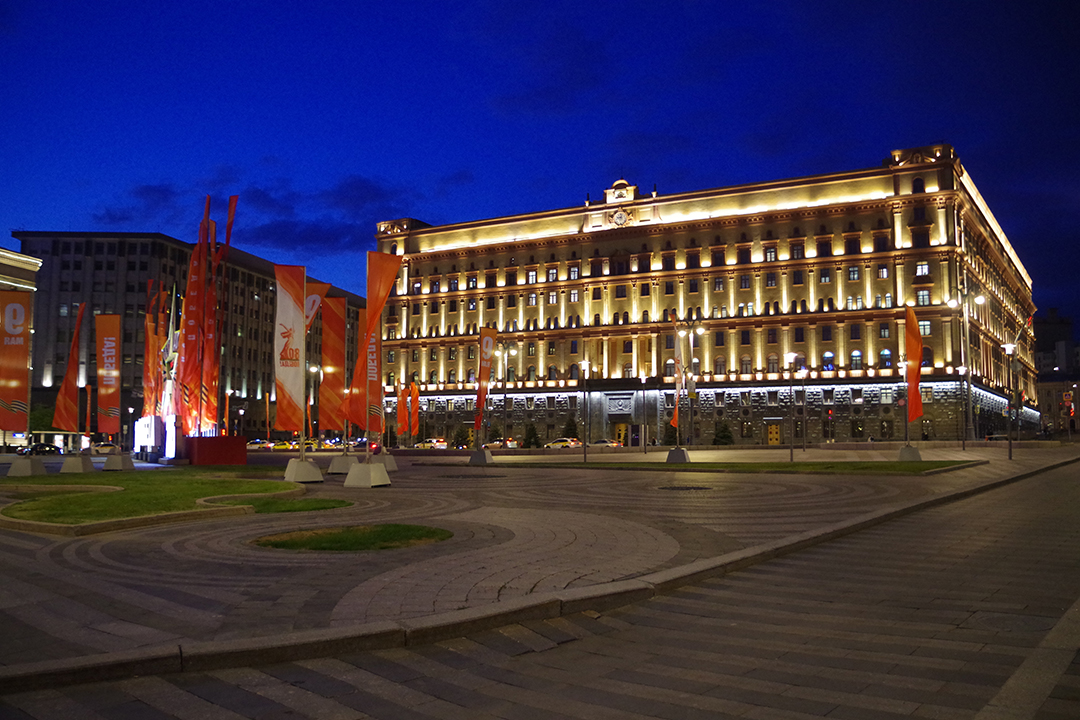
Although there are still many lively streets in Moscow and they are in all parts of the city, the second most popular is Nikolskaya Street that connects Lubyanka Square with Red Square, which means it is in the very centre.
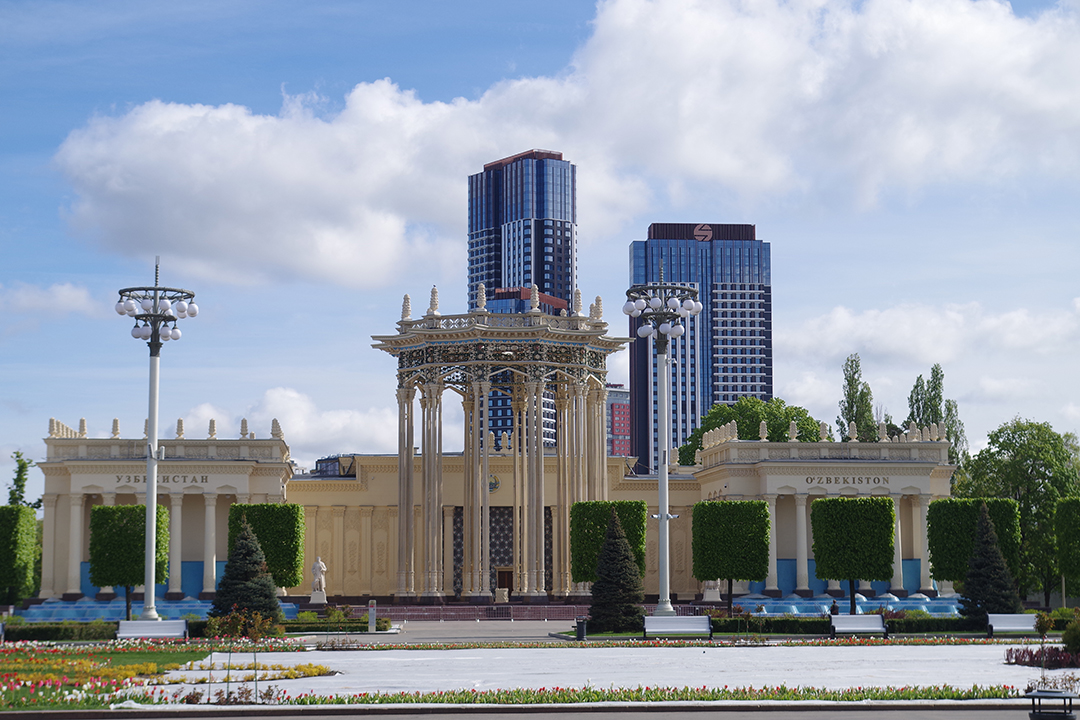
Nikolskaya Street is also full of shops and bars, including those that are at the very top of the price range and where just looking at the price list gives you an adrenaline rush. But there are also places that are suitable for a backpacker's wallet, including the fast-food restaurant Vkusno i tochka, which is run by the former owner of McDonald's and offers pretty much the same food. I have my own opinion about it, but it would not be too nice to share.
Unlike other European cities, where most restaurants have large gardens, in Moscow, especially on the aforementioned streets, they are mostly located inside larger buildings, like the modern Nikolskaya Plaza and GUM shopping centres. GUM is a large department store from 1893, where you can find almost all prestigious brands of watches, shoes and clothes, cosmetics and even bicycle brands. It also has a few restaurants, from those with fancy caviar to simple ice cream shops. But even if you do not intend to buy anything, GUM is still worth visiting, as it is a truly remarkable shopping centre, decorated down to the last detail.
Given the changed circumstances, I would like to finally answer a few practical questions that you will certainly ask yourself if you are planning a trip to Moscow.
I flew to Moscow from Zagreb via Istanbul and, despite the expectation of stricter control upon entry, was quite positively surprised. During my visit, many high-ranking officials were visiting Moscow, so I expected a slightly more detailed inspection and a few more questions when checking my passport, but in reality it was the opposite. There were no questions at all at passport control. The only peculiarity was that a policewoman checked with a magnifying glass if the passport was forged. When passing through customs control, no one checked me or my luggage.
With lots of restrictions in force, it is necessary to prepare a little better for a trip to Russia, as most of the apps we know do not allow you to book flights and accommodation in Russia anymore.
The app I used to find accommodation is called OSTROVOK and offers everything from hostels to luxury hotels. I found a single room without breakfast and with a private bathroom for about 30 euros per night, five minutes from the metro station and 45 minutes from the Red Square.
As for airline tickets, you need to look for them directly with the airlines, as only Turkey, Serbia and Belarus have planes going to Russia from Europe. The cheapest airline tickets to Moscow are from Minsk, as they can be found for around 100 euros, but getting there is a bit more complicated. They are followed by Turkish air companies in terms of price, where you can fly from nearby airports with a transfer in Istanbul for a few hundred euros, depending on your search skills and date flexibility. The fastest but also most expensive connection is from Belgrade.

EU citizens need an entry visa to visit Russia, which can now be arranged online. They have written down very precise instructions in 20 points. The visa is valid for a single entry and for a maximum of 16 days, including the day of arrival and departure. For those who would decide on a slightly more complicated but more affordable trip through Belarus, the good news is that at least until the end of 2025, EU citizens do not need a visa to enter it.

There is a stereotype about Moscow being an expensive city, but this is not entirely true. Unlike central European countries, where the price range between daily necessities and prestigious restaurants is still somewhat acceptable, this is not the case in Moscow. In a restaurant, such as the aforementioned Cheburechnaya SSSR, you can have some meat soup, cheburek, a simple dessert and a pint of beer for around 10 euros. In a fast food restaurant, you will pay around 5 euros for a simple menu. However, if you go to one of the fancy restaurants, you can easily be charged 50 euros or more for a glass of sparkling wine.
With a little moderation, you can survive in Moscow even on a limited budget. It is possible to find very affordable accommodation, and public transport costs next to nothing.
Although in the 90s Russia was considered to be quite a dangerous destination, the situation has almost completely changed. In terms of safety, Moscow can now be compared to most European capitals. The circumstances in which I am writing this article have encouraged me to focus on places that many people do not think about these days. Personally, I find it extremely important to get to know those parts of the world that most people do not currently visit. We rarely get good news from them, and much of what we think we know comes from stereotypes that may be right or wrong. But in the end, we realise that young people in Moscow are the same as those in Ljubljana, Berlin, Beijing or Buenos Aires. They are all faced with common problems like finding their first job, solving the housing crisis, and the like.
No matter how long I think about it, I certainly could not find a better thought to conclude this travelogue than the one written by Mark Twain, with which I bid you farewell until my next travelogue: "Travel is fatal to prejudice, bigotry, and narrow-mindedness, and many of our people need it sorely on these accounts. Broad, wholesome, charitable views of men and things cannot be acquired by vegetating in one little corner of the earth all one's lifetime."

Copyright (©) 2010 - 2026 Youth Hostel | Our Privacy Policy | Cookies | | RPC